Blood, Ridge, and Honor: The Unyielding Pride of Gurkha Warriors
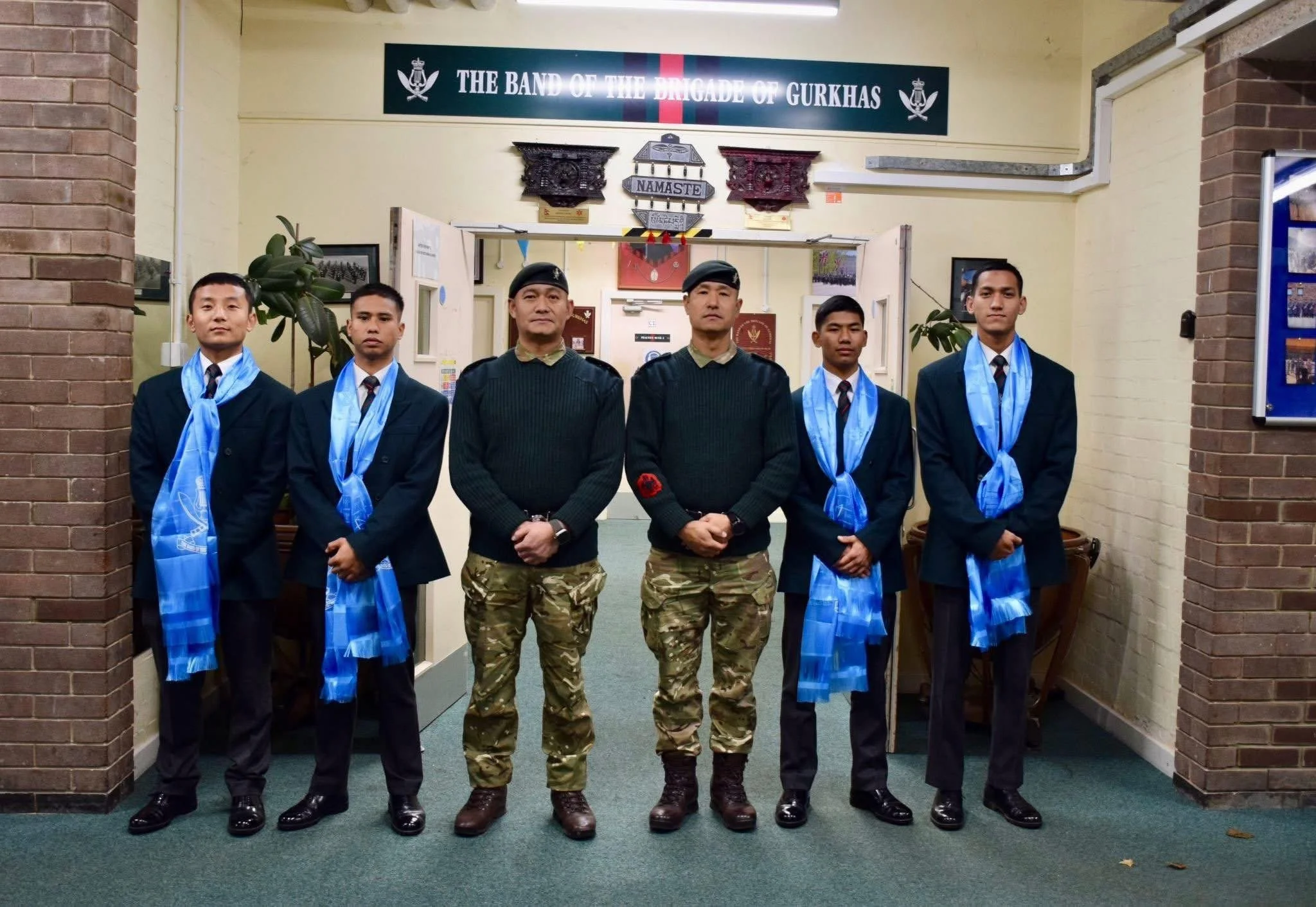
History often paints the Gurkha soldier with broad, romanticized strokes—the flash of a khukuri, the legendary battle cries, and the quiet dignity of men from the Himalayan foothills. Yet, beneath the well-worn public narratives of Victoria Crosses and regimental parades lies a vast, deeply discreet machinery of diplomacy, classified operational deployments, and internal military architecture.
For over two centuries, the presence of Nepalese soldiers within both the British Army and the Indian Army has been governed by secret protocols, geopolitical balancing acts, and specialized roles that rarely make mainstream headlines.
The Tripartite Blueprint and Sovereign Loopholes
The modern framework of Gurkha enlistment is built upon the 1947 Tripartite Agreement signed between the United Kingdom, India, and independent India. However, what textbooks gloss over are the quiet diplomatic amendments and domestic legal workarounds required to keep these units active across changing political landscapes.
When the Brigade of Gurkhas integrated into the British Army post-1947, their primary staging post shifted away from Indian soil toward Malaysia and Singapore. Behind closed doors, British and Nepalese officials continually negotiated the delicate optics of foreign military service. To Kathmandu, allowing citizens to bear arms for foreign flags required a careful tightrope walk between non-alignment and crucial remittances supporting rural Himalayan economies.
In the Indian Army, Gurkha regiments (comprising seven original pre-independence groups plus the 11th Gorkha Rifles raised later) were woven directly into the fabric of the national defense apparatus. Unlike their British counterparts—who largely serve as a specialized, self-contained sub-component—Indian Gorkhas hold complete parity with native Indian infantry, creating a unique cross-border cultural bridge that successive governments have quietly leveraged during moments of regional friction.
Classified Theaters and Unsung Roles
While public histories celebrate iconic engagements like the Falklands or Gallipoli, much of the 20th and 21st-century utility of Gurkha soldiers has centered on specialized, low-profile assignments:
The Malayan Emergency and Jungle Reconnaissance: During the insurgency in Malaya (1948–1960), British Gurkhas were deployed for deep-reconnaissance tracking. Their ability to move silently through dense tropical canopies matched indigenous tracking techniques, forming the backbone of the British psychological and tactical counter-insurgency effort.
The Brunei Revolt of 1962: In a swift, little-discussed midnight operation, a small contingent of Gurkhas secured the oil fields of Brunei and protected the Sultan, an action executed with such speed and discretion that it prevented a wider regional crisis before international forces could even mobilize.
High-Altitude Intelligence and Border Surveillance: Within the Indian Army, Gorkha battalions are routinely rotated into the most unforgiving, glacially locked sectors of the Himalayas. Their physiological adaptation to high altitudes combined with specialized mountain warfare training makes them the silent sentinels of sensitive territorial boundaries where conventional mechanized forces cannot tread.
The Mechanics of Selection: Beyond the Myth
The recruitment pipeline from remote Nepalese villages—such as Gorkha, Pokhara, and the eastern hills—is often romanticized as a raw test of grit, symbolized by the grueling doko race up steep inclines carrying heavy loads.
However, behind this tradition lies an intensely secretive, highly audited selection apparatus. Both British and Indian recruitment teams operate under strict bilateral protocols to prevent local political exploitation. The recruitment camps are localized bubbles where psychological testing, linguistic aptitude (given the necessity of mastering English, Hindi, and regional dialects simultaneously), and medical screenings are conducted with surgical precision.
The selected recruits undergo a silent metamorphosis. They transition from agrarian village life into elite, culturally insular brotherhoods that maintain their own distinct code of conduct, religious ceremonies, and internal judicial mechanisms.
The Modern Paradox
Today, the discreet history of the Gurkha soldier is entering a complex new chapter. Debates around legal equity, pension structures in the UK, and changing recruitment dynamics in Nepal—such as youth shifting toward domestic political scrutiny or alternative Gulf and Western migration corridors—mean the traditional pipeline is evolving.
Yet, the core of their service remains governed by that same quiet discretion: a unique breed of soldier caught between sovereign states, operating in the shadows of high politics, and bound by a fierce, generational code that refuses to seek the spotlight.
