Roots and Rafters: The Soul of Traditional Nepali Architecture and the Evolution of the New Bhaban Ain
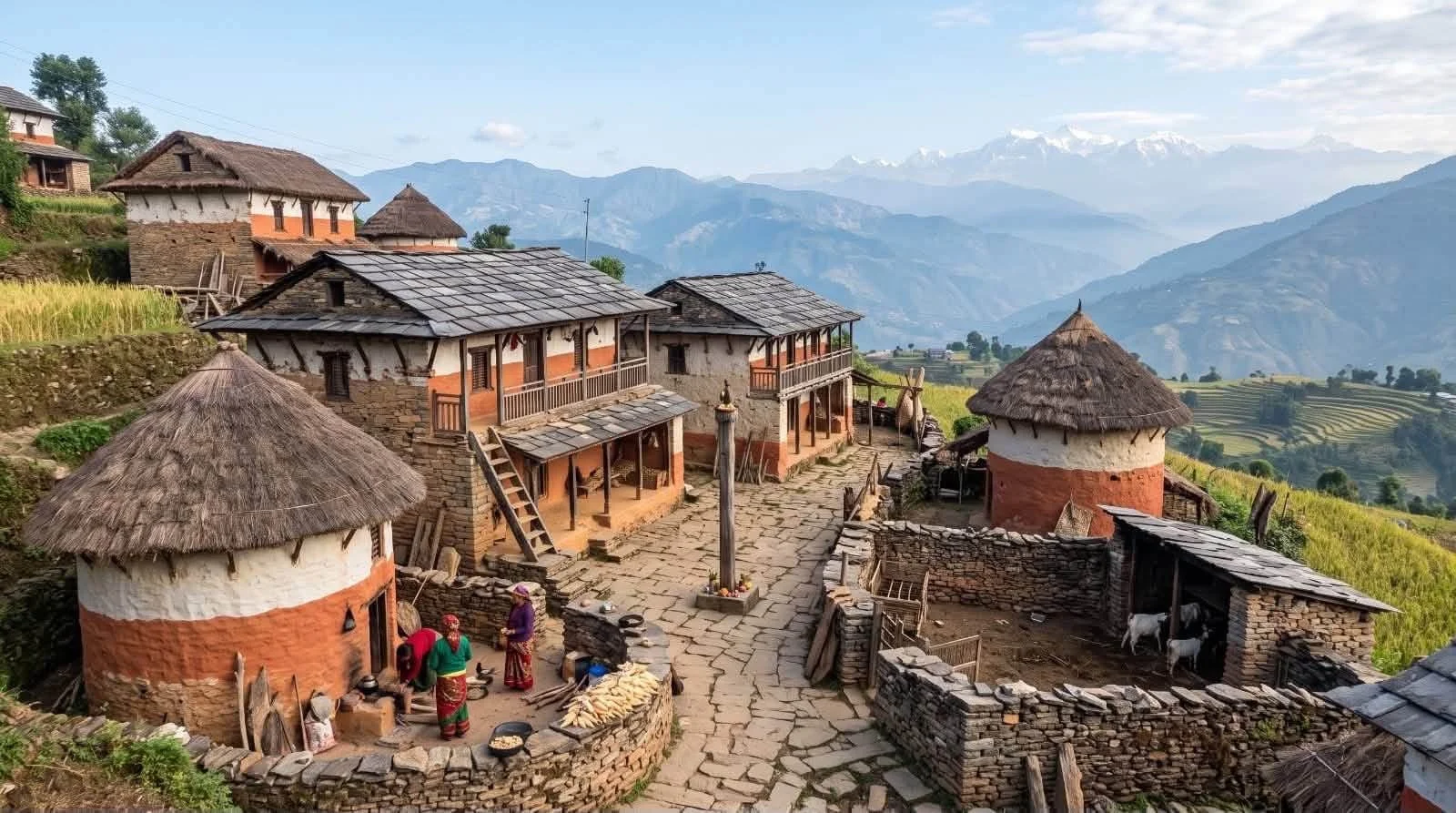
To walk through the historic alleys of the Kathmandu Valley or peer across the terraced hills of rural Nepal is to witness an architectural language written in mud, timber, stone, and ancient wisdom. Traditional Nepali houses are not merely shelters against the Himalayan weather; they are living cultural canvases. However, as modern pressures, seismic realities, and legal frameworks like the new building regulations (Bhaban Ain) reshape the landscape, a profound dialogue is taking place between honoring our architectural heritage and engineering a safer future.
The Living Architecture of Traditional Nepali Homes
For centuries, vernacular architecture in Nepal evolved organically in response to local geography, climate, and community bonding.
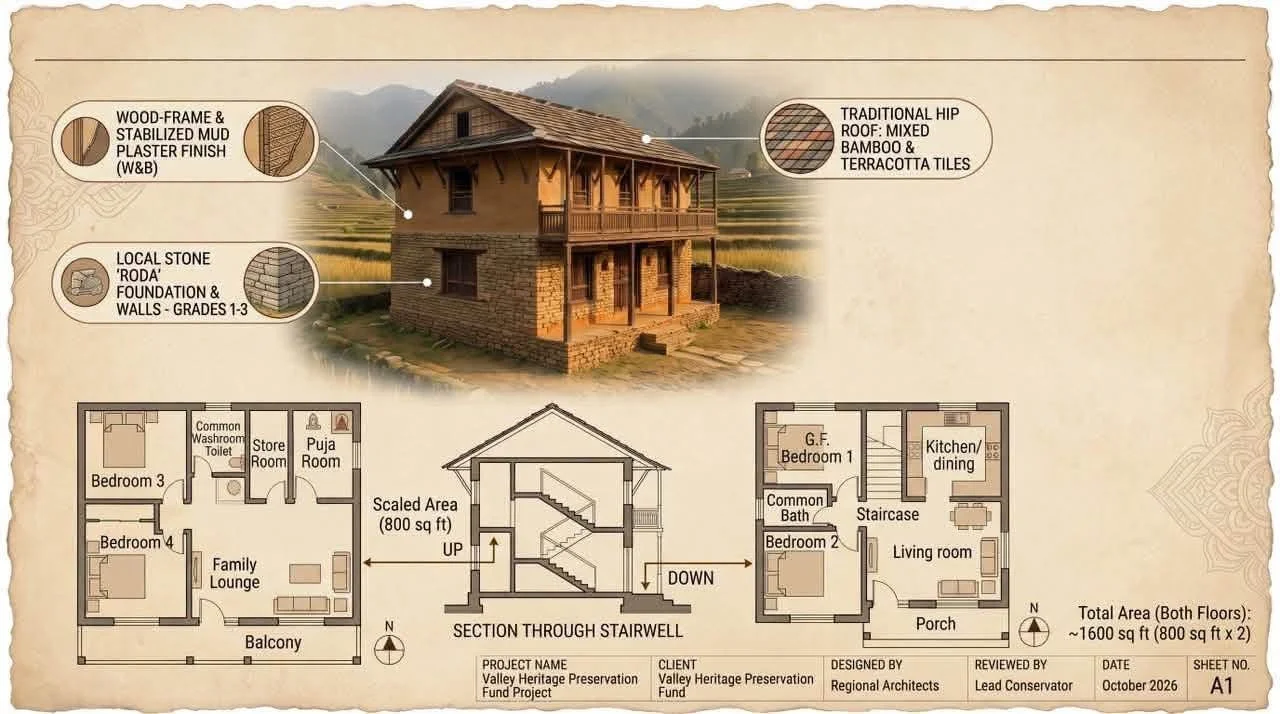
The Material Palette: Traditional Newari brickwork (appa), mud mortar, and intricately carved Sal wood window frames (tundal and jhyal) defined urban settlements. In the hills and mountains, stone masonry bonded with mud and topped with thatched or slate roofs (kalo dhunga) kept interiors naturally insulated against freezing winters and blistering summers.
Spatial Symbolism and Lifestyle: Traditional homes were designed around verticality and multi-generational living. The ground floor (chhen) was typically reserved for livestock or storage, the middle floor served as living and sleeping quarters, and the top floor (baiga or attic) acted as the kitchen and sacred dining space, sitting closest to the heavens.
The Communal Courtyard (Chowk): Houses were rarely isolated units; instead, they faced inward toward shared courtyards. This fostered a tight-knit communal fabric where social gatherings, drying grains, and cultural rituals unfolded collectively.
The Shift: Modern Realities and the New Building Regulations (Bhaban Ain)
While traditional aesthetics carry immense cultural value, Nepal's geography—marked by fragile topography and high seismic activity—demanded a legislative evolution in how structures are built. The introduction of progressive housing legislation and updated building acts (popularly discussed under the framework of the Bhaban Ain and National Building Codes) seeks to bridge this gap.
The modern legislative push addresses critical structural shifts:
Legally Guaranteed Housing Safety: Contemporary building acts focus heavily on making housing a fundamental, protected right, providing structured pathways for low- and middle-income families to secure earthquake-resistant "smart homes".
Standardized Materials and Subsidies: Recognizing the financial burden of safe construction, modern regulatory frameworks incorporate provisions for state-backed support—such as housing subsidies for vulnerable households and allowances for locally sourced natural materials (like riverbed aggregate).
Seismic Resilience vs. Heritage Preservation: The core challenge of the new legal codes lies in balancing rigid engineering standards—such as mandatory reinforced concrete bands, load-bearing specifications, and soil testing—with the preservation of indigenous, low-strength masonry and historic townscapes that define Nepal's global identity.
Harmonizing Heritage with the Future
The evolution from open-mud brick courtyards to regulated, earthquake-resilient structures marks a critical turning point for Nepali architecture. The modern Bhaban Ain framework attempts to move past the chaotic, unregulated concrete sprawl that scarred parts of the country post-earthquake, pushing instead toward organized, safe, and structurally sound community planning.
Ultimately, the future of Nepali housing does not require abandoning our roots. By blending the climate-smart intelligence, natural materials, and community-centric layouts of traditional homes with modern seismic engineering mandated by law, Nepal is crafting a unique architectural identity—one that honors the ancestral spirit of the hills while keeping its people safe under a secure roof.