Rhythms of Paradise: The Vibrant Soul, History, and Legacy of the West Indies
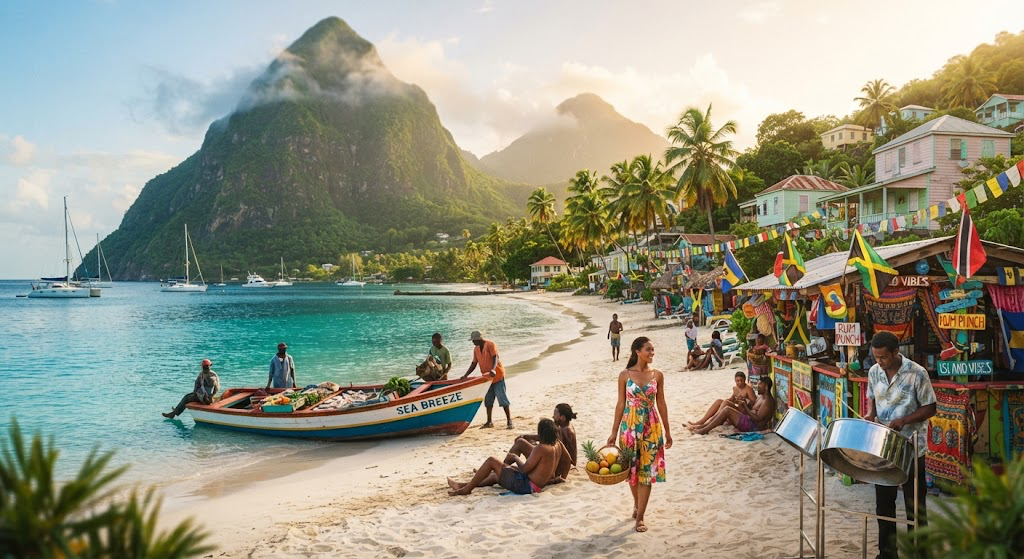
Stretching like a magnificent arc from the tip of Florida down toward the northern coast of South America lies one of the most vibrant regions on Earth. Known collectively as the West Indies (or the Caribbean islands), this tropical mosaic of nations and territories punches far above its weight in global history, cultural impact, and resilience.
Yet, long before its beaches became synonymous with global tourism, the region was the crucible where modern history was forged.
Why Is It Called the "West Indies"?
The name West Indies is one of history's most famous geographic miscalculations.
When explorer Christopher Columbus set sail across the Atlantic Ocean in 1492 under the Spanish flag, his ultimate goal was to find a direct, western trade route to the riches of Asia—specifically India, China, and the Spice Islands (the East Indies). When his ships made landfall on the Bahamian island of San Salvador, Columbus was utterly convinced that he had reached the outer islands of Asia.
Even though subsequent voyages and explorers realized that a massive, uncharted continent blocked the path to Asia, the historic misnomer stuck. To distinguish these lands from the "East Indies" of South and Southeast Asia, Europeans labeled the island chain the West Indies. That single navigational error permanently stamped a piece of Asian geography onto the maps of the Western Hemisphere.
A Complex and Turbulent History
The history of the West Indies is a profound narrative of collision, survival, and transformation.
The Indigenous Era: Before European contact, the islands were inhabited by diverse Indigenous peoples, notably the Taino, Arawak, and Carib communities, who had established thriving societies, agriculture, and inter-island trading networks.
Colonial Exploitation and the Transatlantic Trade: European colonization brought devastating changes. Spanish, British, French, and Dutch powers competed for dominance, turning the islands into lucrative plantation economies. The tragic devastation of indigenous populations led to the horrific transatlantic slave trade, forcibly bringing millions of West Africans to the islands to labor on sugar, coffee, and tobacco plantations.
Resistance and Freedom: West Indian history is equally defined by fierce resistance. From maroon communities fighting for autonomy to the monumental Haitian Revolution (1791–1804)—the only successful slave revolt that founded a free nation—the peoples of the West Indies continually fought for human dignity and self-determination.
Cultural Identity: A Vibrant Melting Pot
Because of its historical crossroads, West Indian culture is one of the richest and most diverse cultural tapestries on the planet. It is a dynamic fusion of West African, European, Indigenous, and later South Asian and East Asian influences.
Language and Patois: Alongside official European languages (English, Spanish, French, and Dutch), the islands gave birth to incredible creoles and patois that reflect the linguistic blending of displaced populations.
Music That Moved the World: The West Indies are a global powerhouse of rhythm. From the hypnotic beats of Jamaican reggae and dancehall to Trinidadian calypso and soca, and the infectious groove of Cuban son and Haitian compas, West Indian music speaks volumes about struggle, joy, and celebration.
Carnival: Celebrated across various islands, Carnival is an explosion of color, costumed pageantry, folklore, and dance that serves as an annual ritual of liberation, ancestral remembrance, and community spirit.
Global Importance: More Than Just Paradise
Today, the cultural and geopolitical footprint of the West Indies extends far beyond its sparkling waters:
Literary Giants: The region has produced some of the world's finest writers and thinkers, including Nobel laureates Derek Walcott and V.S. Naipaul, as well as literary icons like Aimé Césaire and George Lamming, whose works dissect post-colonial identity.
The Spirit of Cricket: Uniquely, the West Indies cricket team represents a coalition of multiple different sovereign nations and territories playing under one banner. For decades, West Indies cricket dominated the global stage, acting as a powerful symbol of regional unity and pride.
Environmental and Geopolitical Voice: As frontline nations facing the harsh realities of climate change, rising sea levels, and severe tropical weather, Caribbean leaders play a crucial, vocal role in global environmental advocacy.
The Enduring Legacy
The story of the West Indies is not merely one of colonial footprints or geographic confusion; it is a testament to the indomitable human spirit. From a name born out of a lost explorer's mistake grew a vibrant, resilient collection of cultures that continues to captivate, influence, and inspire the entire world.
