Beyond the Bow: The Cultural, Energetic, and Philosophical Depth of the “Namaste"
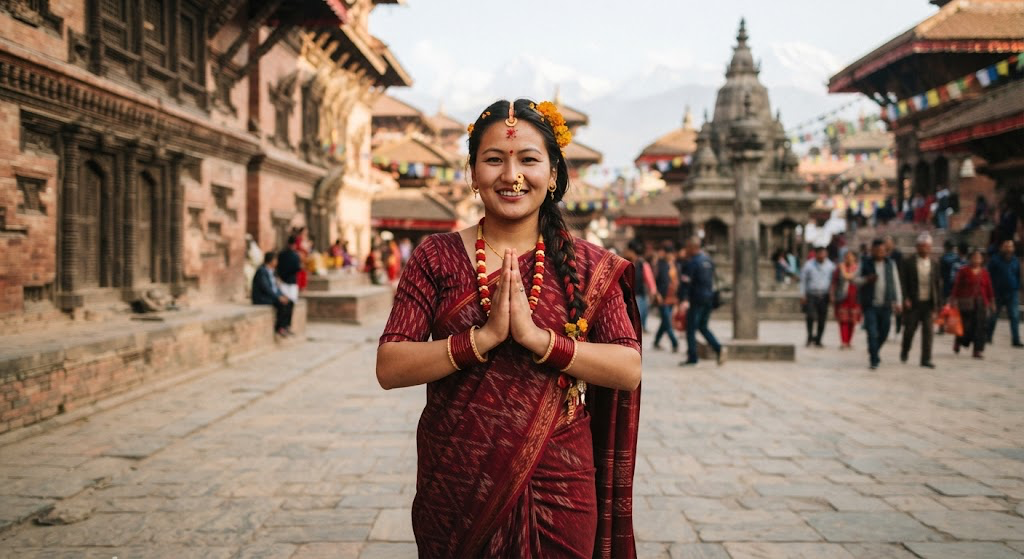
To walk through the bustling streets of Kathmandu, the terraced hills of Karnali, or the quiet mountain settlements of the Himalayas is to be enveloped in a universal rhythm. Hands press together near the chest, a gentle bow follows, and a single, resonant word is offered: Namaste.
Often translated simply as "Hello" or "Greetings" in English, reducing Namaste to a mere social pleasantry misses the profound cultural, spiritual, and philosophical architecture embedded within it. In Nepal, Namaste is not just how you start a conversation—it is an ancient technology of connection, respect, and cosmic acknowledgment.
The Linguistic and Etymological Roots
To understand the weight of the gesture, we must look at its Sanskrit origins. The word breaks down into two core components:
Namaḥ: To bow, adore, or pay homage.
Te: To you (meaning "respect directed toward you").
Combined, it literally translates to "I bow to you" or "I bow to the divine within you." Unlike Western greetings that often focus on external status, titles, or temporal conditions ("Good morning" or "How are you doing today?"), Namaste immediately shifts the focus to the inner essence of the individual standing before you.
The Mechanics: Hand Placement and Energy Circuits
In traditional Nepali culture, the physical execution of Namaste—known as the Anjali Mudra—carries deep energetic significance:
The Palms at the Heart Chakra: Bringing the palms together at the center of the chest (the Anahata or heart chakra) is deliberate. In Eastern philosophy, the heart center is considered the seat of genuine human emotion, empathy, and spiritual alignment.
Closing the Circuit: Joining the right hand (representing higher spiritual nature, giving, or the sun) with the left hand (representing the worldly, receptive, or lunar nature) creates a closed energetic loop. It symbolizes the unification of duality—bringing the mind and heart into complete harmony.
The Bow of Humility: Slightly bowing the head while pressing the palms together represents the conscious dropping of the ego. It is a physical declaration that the person greeting you is met with humility and unconditional dignity, regardless of their social rank, wealth, or background.
A Great Equalizer in a Hierarchical World
One of the most unique sociological aspects of Namaste in Nepal is its role as a profound social equalizer.
In many cultures across the globe, greetings are heavily stratified. You speak differently, bow lower, or use specific honorifics depending on whether you are addressing an elder, a boss, a child, or a stranger. While Nepal certainly has formal linguistic tiers (such as Tapai versus Timro), Namaste cuts through social divides.
A seasoned village elder can offer a Namaste to a young child, and a prime minister can offer it to a roadside vendor, using the exact same gesture and word. By acknowledging the inner divine spark in another human being, the greeting quietly asserts that beneath the superficial layers of caste, class, age, or profession, everyone shares the same fundamental worth.
Inward Awareness in the Modern Era
In contemporary Nepal, as digital screens, global fast-paced lifestyles, and modern pressures begin to reshape daily routines, the ritual of Namaste serves as a daily anchor. It forces a momentary pause. You cannot rush a true Namaste; it requires you to stop, look the other person in the eye, bring your hands together, and be present.
Furthermore, the global shift toward health and hygiene has inadvertently highlighted the ancient wisdom of the gesture. Long before the modern world understood the transmission of germs via handshakes or physical contact, South Asian cultures practiced a touchless greeting that preserved personal space while maximizing warmth and connection.
The Living Legacy
Ultimately, Namaste is the cultural heartbeat of Nepal. It transforms a simple greeting into a silent, sacred exchange. When a Nepali person joins their hands and says Namaste, they are offering a piece of ancient philosophy wrapped in everyday grace—a reminder that in a fragmented world, we are all reflections of the same shared light.
