The Iconoclast of Ecstasy: The Rise, Exile, and Complex Legacy of Osho
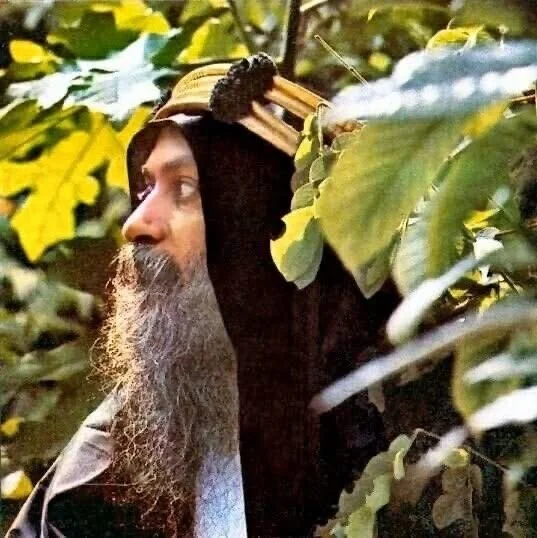
Long before modern wellness trends merged mindfulness with luxury, a rebellious philosophy professor from India threw out the spiritual rulebook entirely. Chandra Mohan Jain—better known to the world as Osho (or Bhagwan Shree Rajneesh)—built an empire on spiritual radicalism, shocking the establishment, pioneering dynamic therapies, and sparking a global phenomenon.
His journey was a rollercoaster of incredible highs, intense controversies, global exiles, and a secretive flight to the Himalayas that permanently shaped the movement's history.
1. The Roots of a Rebel: From Academic to "The Sex Guru"
Osho’s intellectual journey began in a small Indian village, marked by an uncompromisingly questioning mind and a sharp, argumentative edge that won him debate championships. After working as a philosophy professor in Jabalpur, he shocked conservative society by publicly challenging organized religion, traditional morality, and political figures like Mahatma Gandhi.
In the late 1960s, he published controversial works like From Sex to Superconsciousness, arguing that human desire and sexual energy should not be suppressed or treated as taboo, but understood and transformed into spiritual awareness. This earned him the media label "the sex guru", attracting thousands of young Western seekers disillusioned with traditional materialism.
By 1974, he established his famous ashram in Pune, India. Disciples (neo-sannyasins) adopted ochre or red robes, wore bead necklaces (malas) featuring his portrait, and took new Sanskrit names.
2. The American Experiment and the Flight to Nepal
The movement scaled dramatically in the early 1980s when Osho’s followers relocated to a massive, barren ranch in rural Oregon, USA, building the utopian city of Rajneeshpuram. What followed was a turbulent clash with local Oregon residents, culminating in massive legal battles, immigration fraud scandals, and political fallout.
In late 1985, following his arrest and subsequent deportation from the United States, Osho embarked on a chaotic global tour. When numerous countries refused him entry, he ultimately fled to the Himalayas, arriving in Kathmandu, Nepal, in January 1986.
For roughly 45 days, Osho stayed in Nepal, delivering daily discourses to international disciples who had followed him. However, the Nepalese government soon clamped down, refusing visas for his foreign attendants and forcing him to resume his nomadic exile across multiple nations before he could finally return to Pune.
3. Inside the Camp: What Actually Happened?
Life inside an Osho commune was unlike any traditional spiritual sanctuary. It functioned as a psychological laboratory designed to shatter societal conditioning.
The Positive Aspects:
The Integration of Body and Mind: Osho recognized that modern people were too stressed to sit silently in traditional meditation. He introduced Dynamic Meditation—a high-intensity practice involving rapid breathing, cathartic emotional release, shouting, dancing, and stillness—which helped many process trauma and anxiety.
Breaking Taboos: The culture promoted radical personal freedom, equality, and intellectual inquiry, encouraging followers to live fully in the present moment rather than postponing joy for an afterlife.
Intellectual Freedom: His discourse series covered everything from Lao Tzu and Buddha to modern psychology, presenting spirituality through humor, wit, and poetry.
The Negative Aspects:
Control and Cult Dynamics: Despite teachings of ultimate freedom, the administrative leadership around Osho—particularly during the Oregon years—exercised strict totalitarian control, leading to wiretapping, massive political subversion, and a notorious bioterror attack orchestrated by inner-circle executives.
Financial Exploitation: Access to luxury, high-end communes, and spiritual progression often required immense financial contributions, leading critics to label the movement a commercialized enterprise.
The Paradox of the Guru: While Osho preached self-reliance and independence (his "Ten Commandments" famously stated, "Never obey anyone's command unless it is coming from within you"), his followers idolized him with absolute devotion, creating a contradiction at the heart of the community.
A Complex Legacy
Osho passed away in 1990, leaving behind an epitaph that perfectly captured his paradoxical nature: "OSHO. Never Born, Never Died. Only Visited this Planet Earth between December 11, 1931, January 19, 1990."
Today, the Osho International Meditation Resort in Pune remains a bustling global hub, attracting thousands of visitors who seek his unique synthesis of meditation, psychology, and hedonism. To his admirers, he was an enlightened master who woke humanity up from a deep sleep; to his critics, he was a charismatic architect of a dangerous cult. Yet, his footprint on modern alternative spirituality remains impossible to erase.
